From Intervention to Practice: Project ACE Shares Research Insights at AAG and CAHR 2026 Conferences
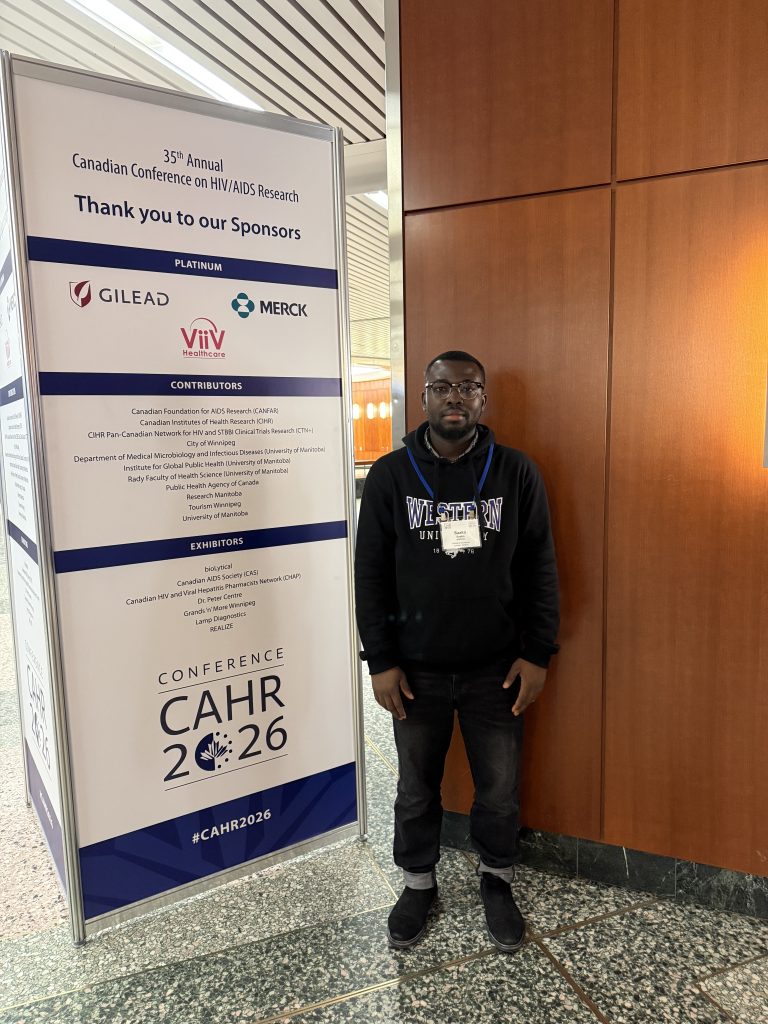
We are thrilled to share that Project ACE recently showcased its research findings at two premier academic conferences in the spring of 2026. Project ACE team member Sulemana Ansumah Saaka presented our latest co-created implementation study, titled “From Intervention to Practice: Evaluating effectiveness of an HIV stigma reduction intervention for racialized immigrants in Canada”. The study was first presented at the American Association of Geographers (AAG) Annual Meeting in San Francisco in March 2026, followed by a presentation at the 35th Annual Canadian Association of HIV Researchers (CAHR) Conference in Winnipeg in April 2026.
Led by a collaborative research team from the University of Western Ontario and Toronto Metropolitan University , this study evaluates the real-world effectiveness of the online Acceptance and Commitment to Empowerment (ACE) HIV stigma reduction intervention. Racialized immigrants in Canada face disproportionately high rates of new HIV infections, compounded by systemic barriers such as racism, unequal healthcare access, and persistent social stigma. Utilizing the Consolidated Framework for Implementation Research (CFIR), our multi-phase project engaged community members, leaders, and service providers across Ontario and Alberta to address these critical inequities.
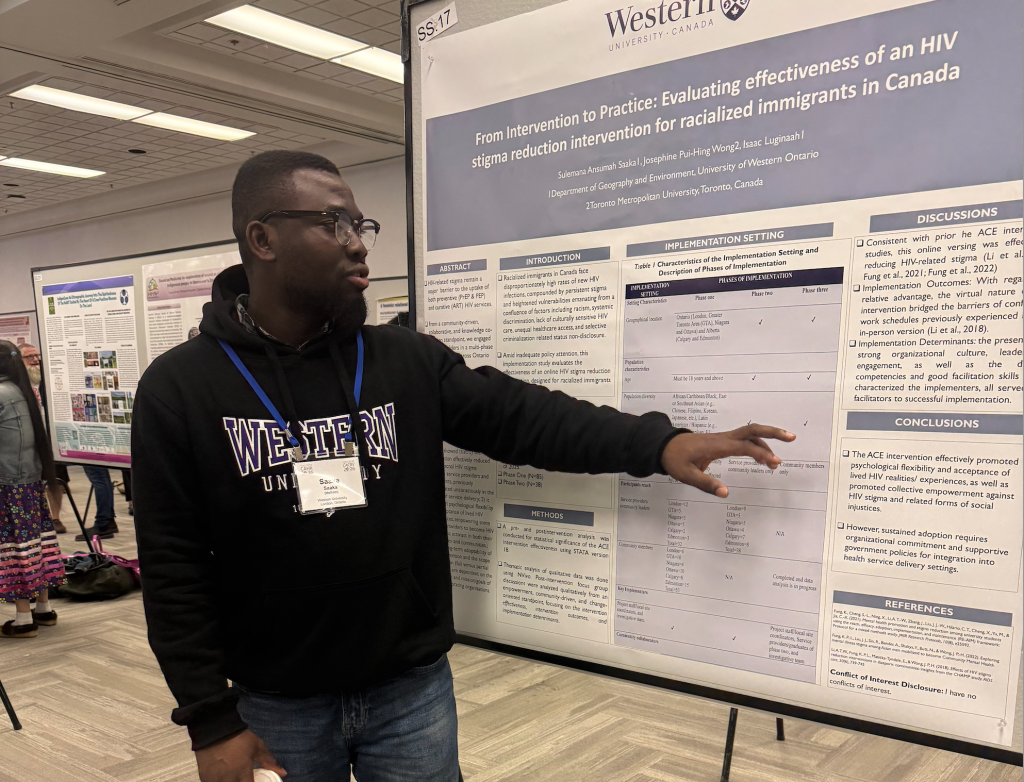
The findings presented on the poster demonstrate that the virtual ACE intervention is highly effective at reducing interpersonal HIV stigma between service providers and their clients. Furthermore, the online format successfully bridged scheduling barriers previously experienced in face-to-face iterations. By fostering psychological flexibility and acceptance, the intervention empowered service providers to actively step into roles as HIV anti-stigma activists within their respective workplaces and broader communities.
While the study highlights strong organizational culture and digital competency as key facilitators of this success, it underscores that long-term sustainability relies heavily on organizational commitment and supportive government health policies. We invite you to view the conference photos of Saaka presenting this work below, along with the full poster PDF detailing our methodologies, implementation phases, and complete findings.
Authors: Sulemana Saaka, Josephine Pui-Hing Wong, Isaac Luginaah
You may download the full research poster below:
Title: From Intervention to Practice: Evaluating effectiveness of an HIV stigma reduction intervention for racialized immigrants in Canada